Critical Asked Questions (CAQ) About PSM-AI Essentials Course
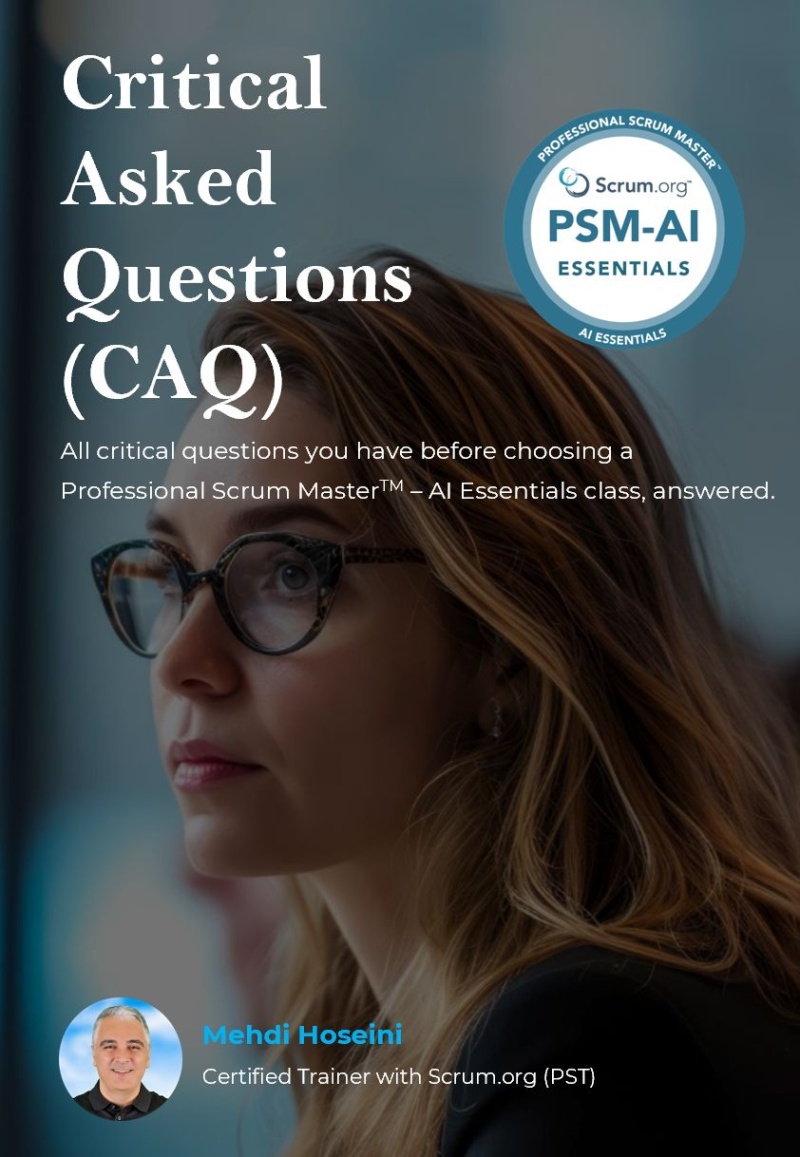
In this blog post, I answer critical questions you have before choosing a Professional Scrum Master – AI Essentials class. Image 1- Why should I take the class when I can directly take the PSM-AI Essentials exam and get the certificate without attending the class?Yes, you can skip the class and just take the exam.
In this blog post, I answer critical questions you have before choosing a Professional Scrum Master – AI Essentials class. Image 1- Why should I take the class when I can directly take the PSM-AI Essentials exam and get the certificate without attending the class?Yes, you can skip the class and just take the exam.
When your people ask you how AI should reshape your team's Scrum way of working, nobody will ask to see your badge. They will watch how you show up in the room and how you lead your Scrum Team in their AI journey.
These are the consequences of getting the certificate without attending the class:
You just learn the theory under your own supervision. (Not the practical aspect, and with no trainer supervision)
You are not sure if you have learned all the pieces of the puzzle that you should learn. A lot of blind spots can be left.
You miss the opportunity to get your hands dirty through practical exercises in class.
In context
- Topic: Proyectos, PMO y Riesgos — Gestión de proyectos, oficinas de proyecto y riesgo del portafolio.
- Source: Scrum.org
- Published: 19/08/2026
Continue reading at the original source →
Excerpt published automatically by the site radar. The full text belongs to its publisher and is linked above.
Por qué importa
Una oficina de proyectos vale por las decisiones que hace posibles, no por los reportes que produce. Cuando la PMO se convierte en el área que persigue actualizaciones de estado, ya perdió: el equipo aprende a llenar el formato y la información real vuelve a viajar por los pasillos.
Mi filtro es la calidad del reporte de estado. Si todos los proyectos están en verde, el sistema de información no sirve: en cualquier portafolio real hay iniciativas en problemas, y una organización sana las muestra a tiempo en vez de descubrirlas en el comité de cierre.
Lo que suele salir mal
El error clásico es tratar la gestión de riesgos como un entregable de la fase de planificación. Se arma la matriz, se aprueba, se archiva. Nadie la vuelve a abrir hasta el cierre, cuando sirve para documentar que el riesgo estaba previsto — que es exactamente lo contrario de gestionarlo.
Qué mirar
- Qué riesgos están identificados, quién es dueño de cada uno y cuándo se revisaron por última vez.
- El tamaño de la primera entrega útil: mientras más lejos esté, más se parece a una apuesta.
- Cómo se estimó y qué tan cerca estuvieron las estimaciones anteriores de la misma organización.
Cómo leo esta entrada
Yo lo usaría para revisar cómo se estima en la organización. Si las estimaciones históricas se pasaron sistemáticamente por la mitad y nadie ajustó el método, no hay proyecto que salga bien: se está planificando con un metro que mide corto y culpando al equipo por no llegar.
La noticia original está publicada en otro idioma; acá se cita el extracto tal como lo entrega el medio y el comentario se escribe en español.
¿Lo estás viviendo en tu equipo?
Abrí el chat y contame cómo lo están manejando. Me interesa comparar notas.