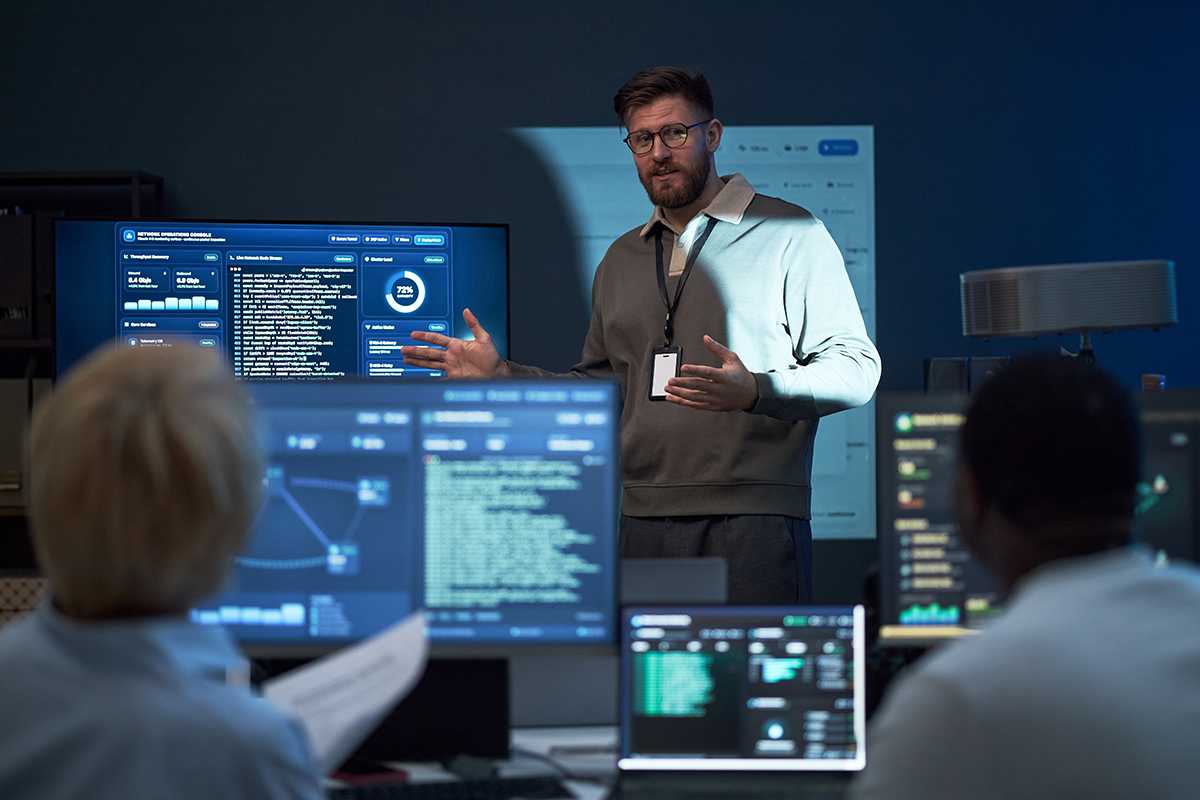
AI-powered attacks are becoming faster and more automated, putting pressure on security teams that still investigate alerts sequentially. At RSAC 2026, Arctic Wolf introduced the Aurora® Superintelligence Platform and Aurora® Agentic SOC, shifting from a human-led Security Operations Centre (SOC) to an agent-led model…
AI-powered attacks are becoming faster and more automated, putting pressure on security teams that still investigate alerts sequentially. At RSAC 2026, Arctic Wolf introduced the Aurora® Superintelligence Platform and Aurora® Agentic SOC, shifting from a human-led Security Operations Centre (SOC) to an agent-led model…
Here’s how these solutions are changing security operations.
Aurora’s Swarm of Experts uses hundreds of specialised AI agents rather than a single general-purpose model. Each agent is trained for a specific SOC function, such as triage, investigation, response or threat hunting.
Because each agent performs a defined task, it’s easier to test and validate, delivering more consistent AI-driven decisions.
Oversight Agents coordinate the swarm, while Process Agents automate repetitive tasks, allowing specialised agents to focus on their area of expertise.
Traditional SOCs investigate incidents in sequence. Alerts move from Tier 1 to Tier 2 to Tier 3, creating delays while attackers continue moving through the environment. The Aurora Agentic SOC runs SOC functions simultaneously. AI agents investigate, correlate evidence, and begin responding immediately, without waiting for the next analyst.
In context
- Topic: Ciberseguridad — Riesgo, identidad, respuesta a incidentes y cumplimiento.
- Source: CIO
- Published: 26/08/2026
Continue reading at the original source →
Excerpt published automatically by the site radar. The full text belongs to its publisher and is linked above.
Why it matters
Most incidents that end up being expensive did not start with a sophisticated technique. They started with an account that should have been closed when somebody resigned, a server nobody knew was still on, or a broad permission granted to unblock someone that then stayed forever.
My way of reading these cases is to ask what failed in the process, not what failed in the machine. Behind nearly every incident there is a reasonable decision taken under pressure: granting a permission to unblock somebody, postponing an update because it was month-end. That is where the lesson lives.
What usually goes wrong
What I see fail most is the backup. It is configured, it runs every night, nobody checks it. The day you need to restore, it turns out it had been failing silently for four months, or that everything was backed up except exactly what was needed. A backup never restored is an assumption.
What to watch
- Whether third parties or suppliers were in the chain, because the perimeter now includes partners.
- How long it took to detect, usually the most revealing metric in the whole case.
- Whether initial access came from a legitimate account handled badly, which is the most frequent pattern.
How I read this entry
What I would review this very week is access: accounts belonging to people who left, permissions that grew without anyone trimming them, and shared credentials everybody swears do not exist. It is the least glamorous work and the one that cuts off the most attacks.
This entry is an excerpt from the original source, selected by the site radar. The commentary above is the site's own and does not belong to the cited publisher.
Living through this in your own team?
Open the chat and tell me how you're handling it. I'm interested in comparing notes.