
Production Validation: The Missing Layer in Enterprise Releases
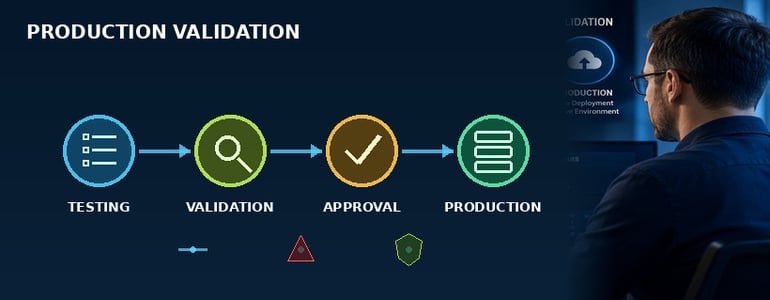
Production validation adds a critical business-control layer between testing and deployment, combining data checks, exception review, approvals, reconciliation and operational readiness before a release reaches production.
Production validation adds a critical business-control layer between testing and deployment, combining data checks, exception review, approvals, reconciliation and operational readiness before a release reaches production.
In context
- Topic: Estrategia y Gobierno de TI — Decisiones de portafolio, costo total, gobierno y marcos de referencia.
- Source: DevOps.com
- Published: 27/08/2026
Continue reading at the original source →
Excerpt published automatically by the site radar. The full text belongs to its publisher and is linked above.
Why it matters
IT governance rarely fails for lack of technology. It fails for lack of clarity about who decides what. A story like this one is usually the visible symptom of an operating model that no longer fits the size of the organisation, and those models get changed before the pressure arrives, not after.
When I look at a move like this, the question is not which tool they bought but which capability was left installed: an architecture function that holds the line on criteria, a prioritised portfolio with real business owners, and metrics somebody actually reviews every week. Without that, any announcement dissolves within twelve months.
What usually goes wrong
The classic mistake is confusing the plan with the execution. A three-year roadmap gets approved in a two-hour committee and nobody revisits it until there is a problem. Plans that work get reviewed every quarter and corrected without drama; the ones that do not get defended instead.
What to watch
- The real calendar of contracts and renewals: that is where you see whether the move was strategic or was an expiry date.
- What gets switched off to fund the new thing; if nothing does, the budget will hurt in six months.
- How the relationship with current vendors is left, which is usually where the dependency nobody measured is sitting.
How I read this entry
The way I would bring this down to earth is in three moves: name an owner with their own budget, define two metrics reviewed in committee every month, and set a date on which somebody decides to continue or stop. It is unglamorous, and it is what separates programmes that land from programmes that get discussed.
This entry is an excerpt from the original source, selected by the site radar. The commentary above is the site's own and does not belong to the cited publisher.
Living through this in your own team?
Open the chat and tell me how you're handling it. I'm interested in comparing notes.