
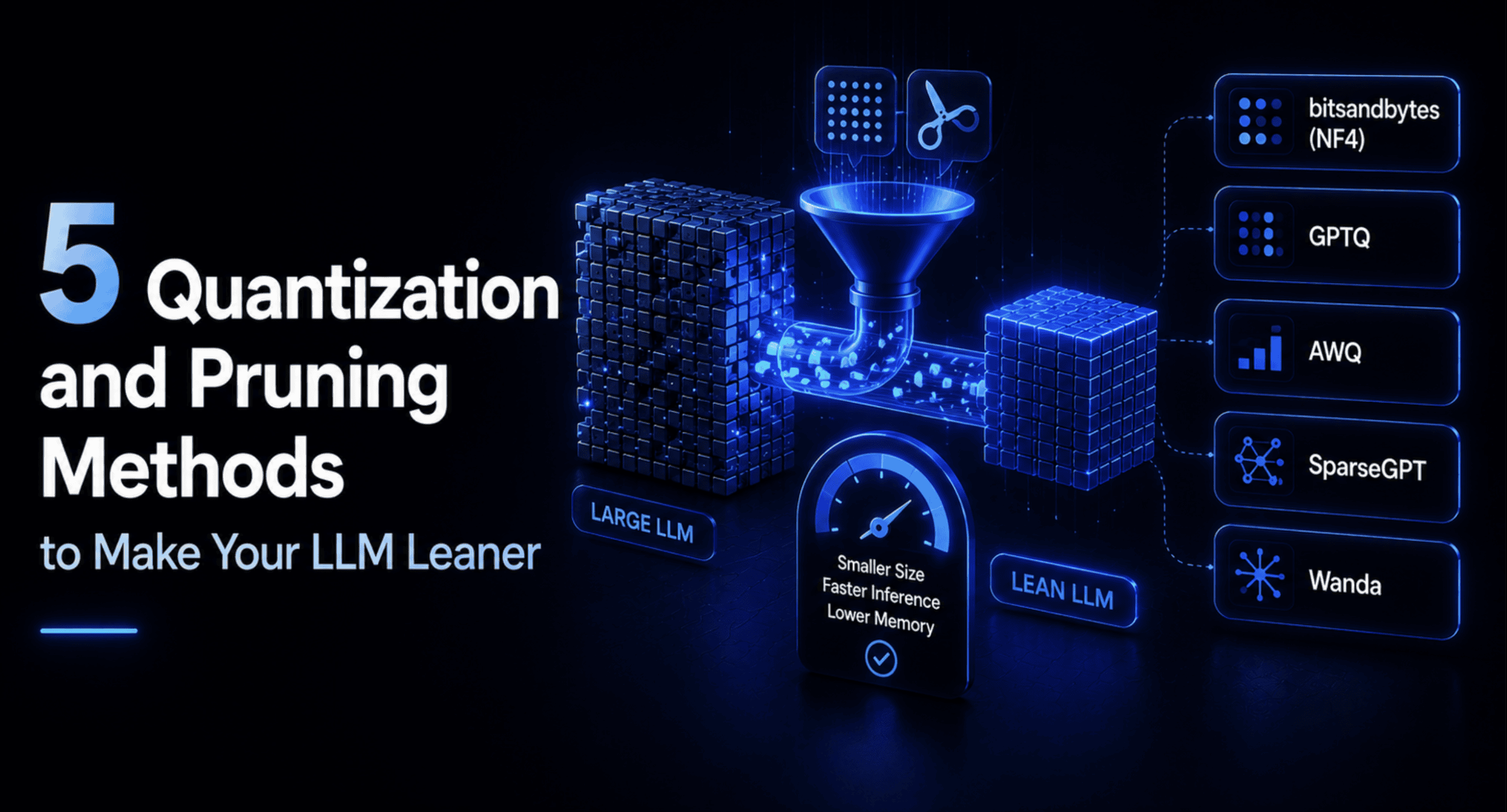
This article walks through what each technique actually does, why skipping them costs real money and real latency, and then gets hands-on with five specific methods people are running in production right now.
This article walks through what each technique actually does, why skipping them costs real money and real latency, and then gets hands-on with five specific methods people are running in production right now.
In context
- Topic: Inteligencia Artificial — IA aplicada al negocio: casos, límites, costos y gobierno.
- Source: KDnuggets
- Published: 28/08/2026
Continue reading at the original source →
Excerpt published automatically by the site radar. The full text belongs to its publisher and is linked above.
Why it matters
Every week there is an announcement that promises to change everything, and every week most organisations are still fighting the same battle: messy data, processes nobody documented, and expectations running faster than capability. This story reads better with that in the background.
I always separate two things that get mixed up: the demo and the operation. A demo needs to work once with someone watching. An operation needs to work a thousand times with nobody watching, with odd cases, dirty data, at two in the morning. The gap between the two is where the budget goes.
What usually goes wrong
The point where it usually breaks is the handover to operations. The team that built the pilot knows how to read the results; the team receiving it does not. Without training and written criteria, people start accepting everything the model says or ignoring it entirely, and both are equally expensive.
What to watch
- Cost per query at real volume, not pilot volume: the variable that produces the most surprises.
- Where the data ends up and under what contract, especially when customer information is involved.
- Whether the organisation can change provider without rebuilding everything, which is the proof it did not get locked in.
How I read this entry
My practical advice is to fix on day one what happens when the model is wrong: who reviews, how often, and at what point it gets switched off. It sounds defensive, but it is exactly what lets you be aggressive later, because the risk stopped being an unknown.
This entry is an excerpt from the original source, selected by the site radar. The commentary above is the site's own and does not belong to the cited publisher.
Living through this in your own team?
Open the chat and tell me how you're handling it. I'm interested in comparing notes.