
Weedhack Malware Spreads via Fake Minecraft Clients and SEO Poisoning
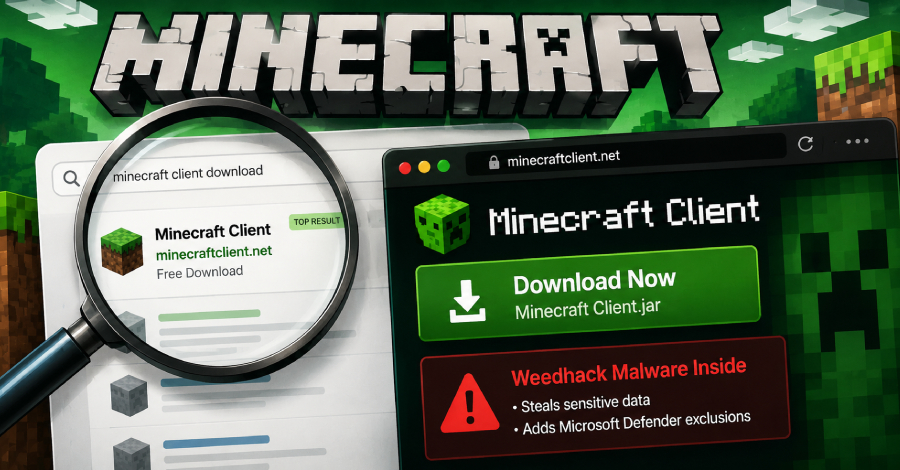
Cybersecurity researchers have found that several websites are still actively distributing a malware family known as Weedhack to gamers by masquerading as Minecraft clients.
Cybersecurity researchers have found that several websites are still actively distributing a malware family known as Weedhack to gamers by masquerading as Minecraft clients.
McAfee Labs said it detected and blocked more than 6,300 attempts to access malicious sites, adding that it found lookalike gaming websites designed to mimic legitimate projects, including branding, feature lists, FAQs,
In context
- Topic: Ciberseguridad — Riesgo, identidad, respuesta a incidentes y cumplimiento.
- Source: The Hacker News
- Published: 24/08/2026
Continue reading at the original source →
Excerpt published automatically by the site radar. The full text belongs to its publisher and is linked above.
Why it matters
Every time I read a case like this I think the same thing: security is not bought, it is operated. You can own every tool on the market and remain exposed if nobody reviews the alerts, if patches get applied when there is time, or if the backup was never tested by actually restoring it.
I separate technical risk from business risk, because they do not always match. A critical vulnerability in an isolated system matters less than a medium one in the system that issues invoices. Prioritising by severity without looking at where the money is is an expensive way to work hard and protect little.
What usually goes wrong
The most expensive blind spot is usually the supplier. The organisation hardens its own perimeter and grants broad access to a third party that has half those controls. A good share of the incidents I have seen in this region came in that way, and the contract said nothing about it.
What to watch
- Whether initial access came from a legitimate account handled badly, which is the most frequent pattern.
- What could be restored and how fast — a backup that was never tested does not count.
- How it was communicated to customers and regulators, which is where reputational cost is decided.
How I read this entry
What I would review this very week is access: accounts belonging to people who left, permissions that grew without anyone trimming them, and shared credentials everybody swears do not exist. It is the least glamorous work and the one that cuts off the most attacks.
This entry is an excerpt from the original source, selected by the site radar. The commentary above is the site's own and does not belong to the cited publisher.
Living through this in your own team?
Open the chat and tell me how you're handling it. I'm interested in comparing notes.