
Understand the agentic supply chain: 5 things CIOs must know
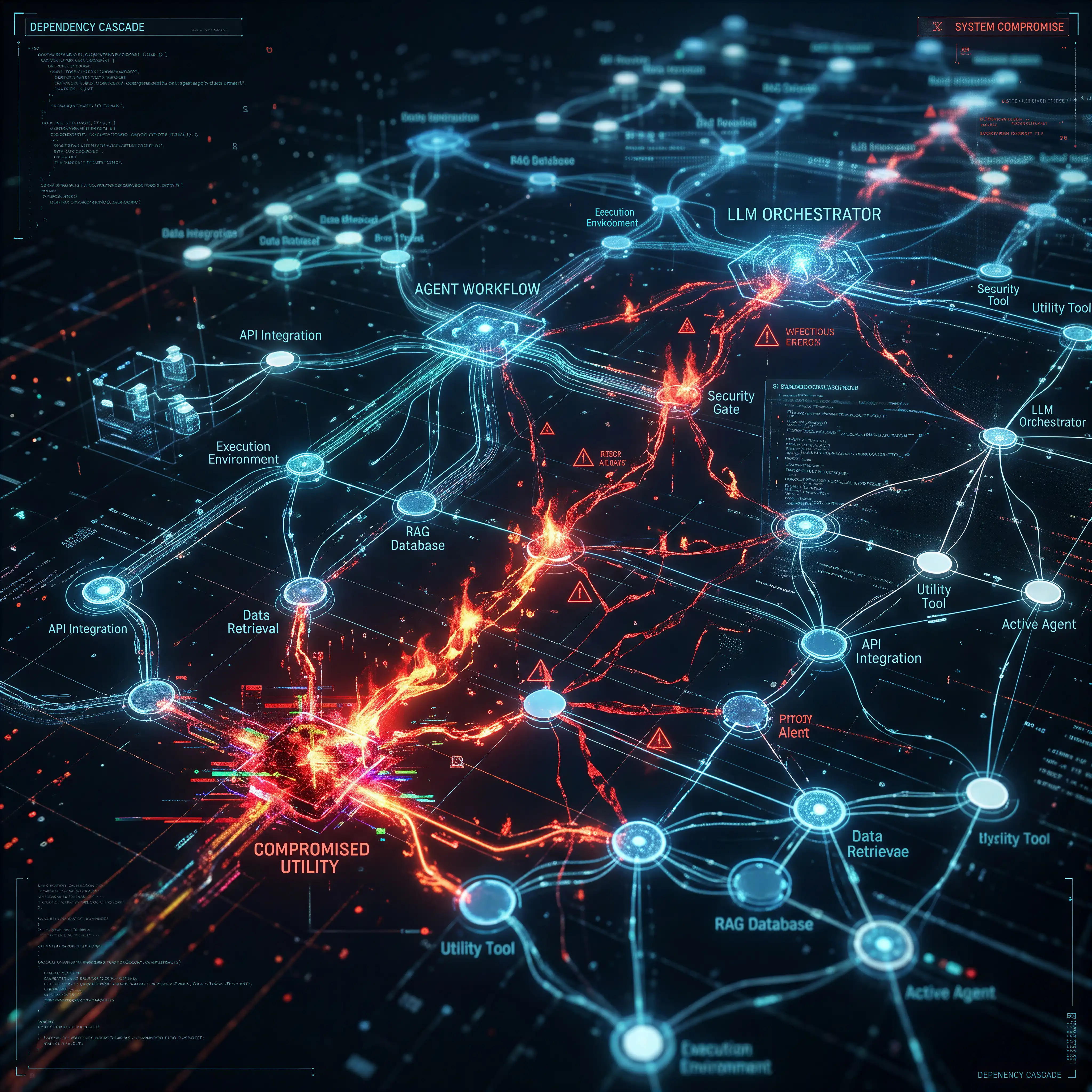
Software supply chain risk used to have a fairly contained definition: open-source packages, build pipelines, and the occasional compromised maintainer account. AI agents have changed that.
Software supply chain risk used to have a fairly contained definition: open-source packages, build pipelines, and the occasional compromised maintainer account. AI agents have changed that.
This differs from the dependencies CIOs have long governed. An agent’s tool catalog can change the day after approval, and the agent will trust whatever shows up the next time it looks. OWASP now includes Agentic Supply Chain Vulnerabilities (ASI04) in its Top 10 for Agentic Applications, describing risks that “arise when agents, tools, and related artifacts they work with are provided by third parties and may be malicious, compromised, or tampered with in transit.”
Here are five things technology leaders must understand about the agentic supply chain as agents become part of enterprise operations.
1. An agent can inherit the trust of something it connects to
When an agent calls a tool or connects to an MCP server, it absorbs that component’s context and ability to action into its own reasoning. Integrating an MCP server establishes a trust relationship that affects every connected agent.
That trust can travel through plaintext instructions and metadata in addition to code. An attacker doesn’t need to compromise a tool’s implementation to compromise the agent using it. A tool’s description (the metadata an agent reads to decide how and when to call it) is enough to influence how an agent reasons about and invokes that tool. Hiding an instruction inside a text description can be enough for an agent to follow it.
The card
- Industry: Logística y cadena de suministro — Transporte, inventario y última milla: visibilidad y decisión.
- Source: CIO
- Published: 19/10/2026
Read the full case at the source →
Excerpt from the original publisher, selected automatically. The full text belongs to its publisher and is linked above.
How I read this case
In logistics technology is rarely the bottleneck: the bottleneck is data that arrives late and a supplier with no way to integrate. Seeing inventory in real time is worth nothing if the replenishment decision still takes three days to approve. The gain is in shortening the cycle, not in the dashboard.
The three questions
- Whether it improves visibility or also shortens decision time.
- How small suppliers are integrated, since they are usually the majority.
- What the operation does when the system is unavailable.
This commentary is my own and does not belong to the cited publisher.
Comments
No comments yet. Yours can be the first.
Are you trying something similar?
Open the chat and tell me where you are. I am interested in comparing notes, no sales agenda.