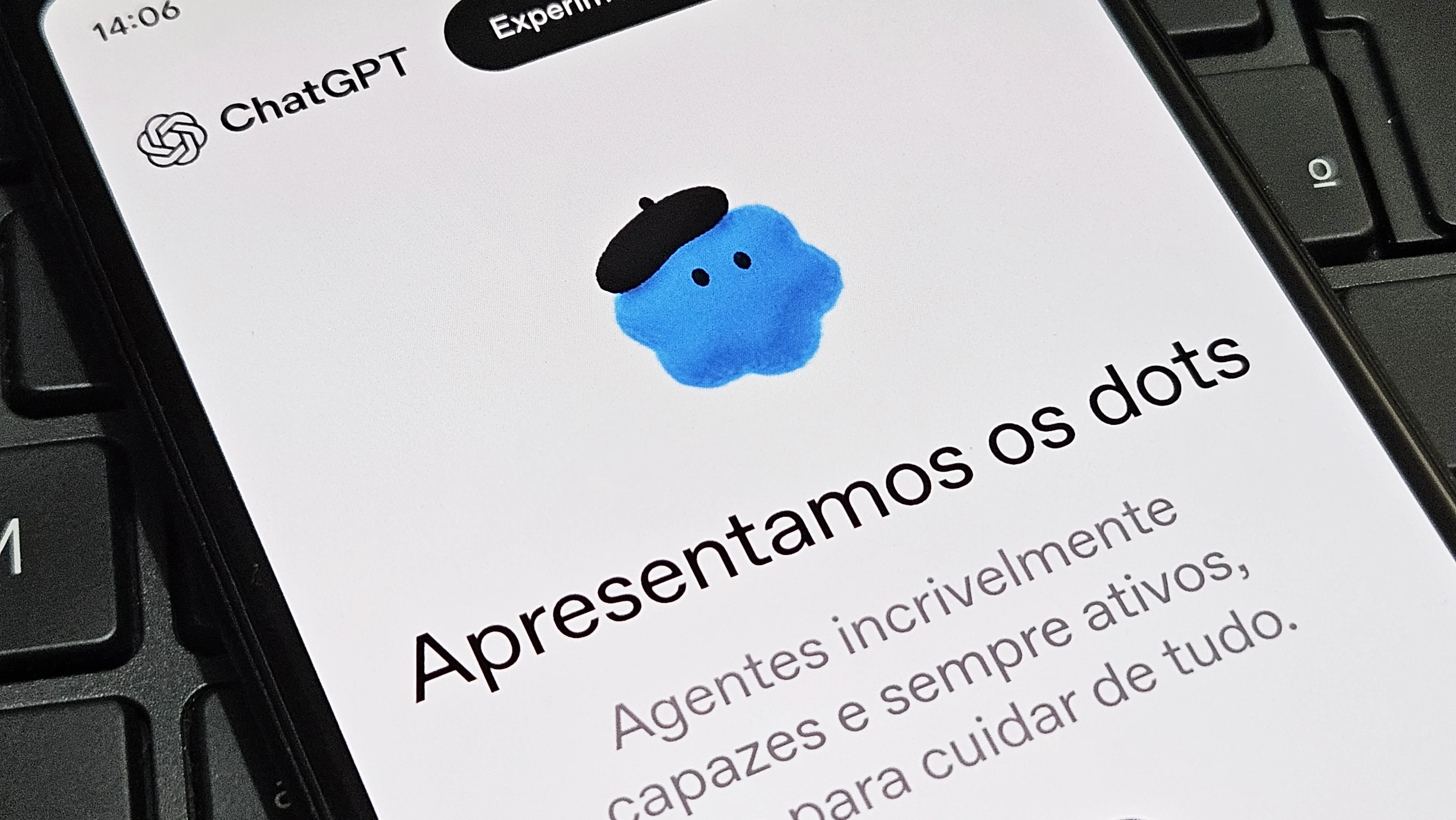
Os dots são agentes de inteligência artificial integrados ao ChatGPT que podem cuidar de tarefas e acompanhar projetos por conta própria. Eles trabalham em computadores na nuvem e conseguem pesquisar informações, acessar aplicativos e dar continuidade às atividades mesmo quando você não está usando o ChatGPT.
Os dots são agentes de inteligência artificial integrados ao ChatGPT que podem cuidar de tarefas e acompanhar projetos por conta própria. Eles trabalham em computadores na nuvem e conseguem pesquisar informações, acessar aplicativos e dar continuidade às atividades mesmo quando você não está usando o ChatGPT.
Para realizar as tarefas, os agentes usam as informações da memória do ChatGPT para conhecer suas preferências e entender como você costuma trabalhar. Com acesso a mais de quatro mil aplicativos por meio de plugins, eles também conseguem acompanhar mudanças nos projetos, executar atividades mais complexas e organizar as próximas etapas.
Você pode conversar com os dots por diferentes plataformas, como as versões web, desktop e móvel do ChatGPT, além de serviços como Slack e Microsoft Teams. O recurso está disponível para assinantes dos planos Pro, Business Premium e Enterprise.
8 formas de usar os dots do ChatGPT Confira oito maneiras de utilizar os dots do ChatGPT:
1. Desenvolvimento de software e revisão de código Se você trabalha com desenvolvimento de software, pode deixar os dots cuidarem de parte da identificação e correção de erros. Ao receber relatos de problemas no Slack, por exemplo, o agente investiga o que aconteceu e acompanha os comentários dos clientes para encontrar falhas recorrentes e sugerir melhorias.
A ferramenta também se conecta ao Codex e ao GitHub para analisar problemas e alterações no código. Depois dos ajustes, ele testa as mudanças e envia o código atualizado para a equipe avaliar, com vídeos que mostram o resultado.
Em contexto
- Tema: Inteligencia Artificial — IA aplicada al negocio: casos, límites, costos y gobierno.
- Fonte: Canaltech
- Publicado: 22/11/2026
Continuar lendo na fonte original →
Trecho publicado automaticamente pelo radar do site. O texto completo pertence ao veículo e está vinculado acima.
Why it matters
Adopting AI in a company is less like buying software and more like hiring someone. You have to teach it the context, review its work at the start, and define what it can sign off alone and what it cannot. The stories worth reading are the ones showing somebody solving that part, not the announcement part.
The first thing I look at is not model capability but the data feeding it. Almost every project I have seen fail did not fail on the algorithm. It failed because the data lived in three systems with three different definitions and nobody wanted to be the one to fix that.
What usually goes wrong
What I see fail most is the expectation. Somebody saw a flawless demo and asked for the same thing in their area within a month, without considering the demo ran on clean data prepared for the occasion. When the real pilot shows uneven results, the unfair conclusion is that the technology does not work.
What to watch
- Cost per query at real volume, not pilot volume: the variable that produces the most surprises.
- Where the data ends up and under what contract, especially when customer information is involved.
- Whether the organisation can change provider without rebuilding everything, which is the proof it did not get locked in.
How I read this entry
I would use it for a talent conversation rather than a purchasing one. The capability that needs installing is not operating a tool, which changes every six months, but framing the problem well and judging the answer. That one stays in the house.
The original story is published in another language; the excerpt is quoted as the publisher delivers it and the commentary is written in English.
Comments
No comments yet. Yours can be the first.
Living through this in your own team?
Open the chat and tell me how you're handling it. I'm interested in comparing notes.