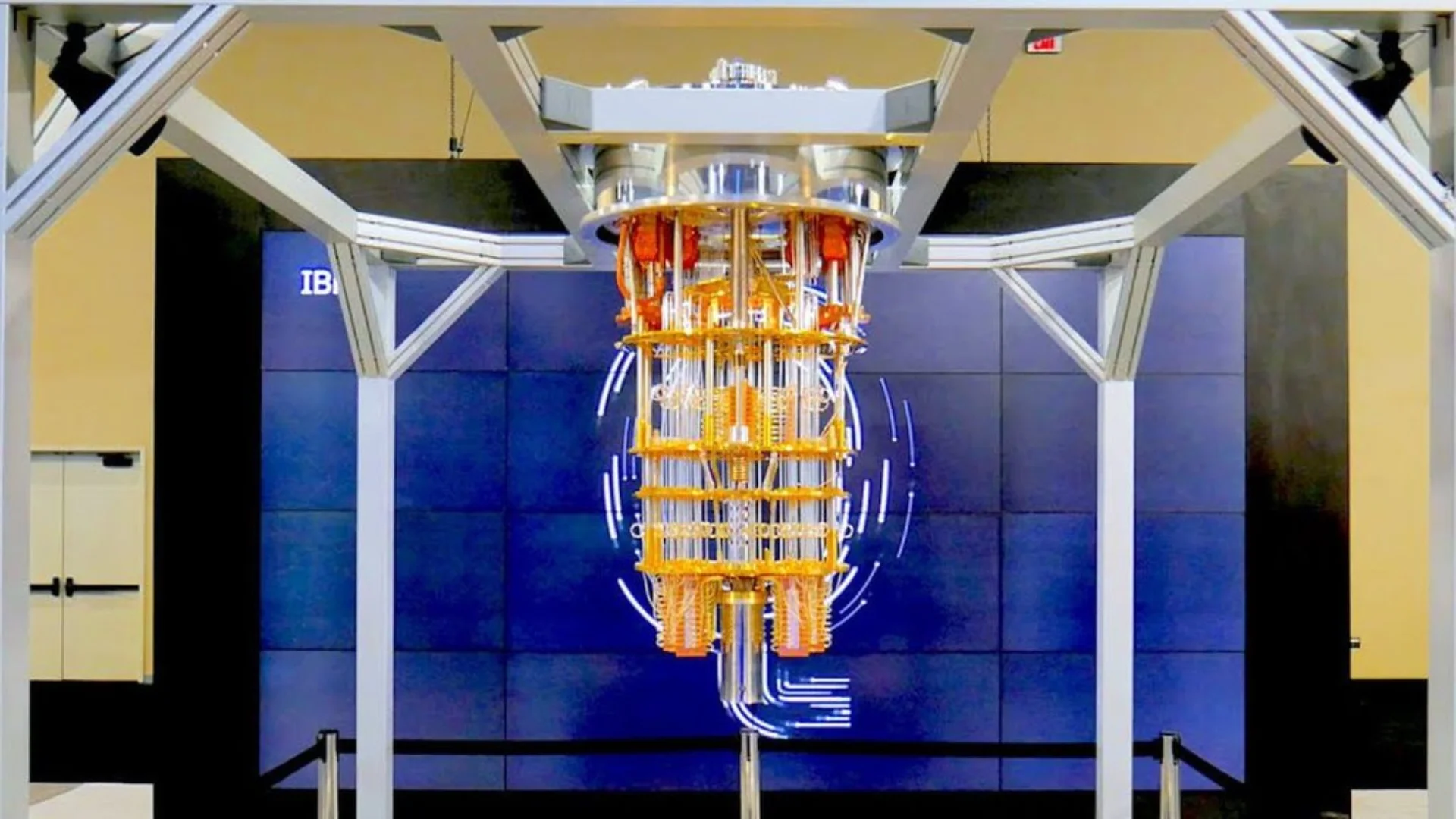
Enquanto grande parte do mercado ainda concentra energia na corrida da inteligência artificial, um risco mais silencioso avança em paralelo. A computação quântica está evoluindo em ritmo acelerado e já começa a exigir uma revisão dos mecanismos de criptografia que protegem governos, bancos e empresas no mundo todo.
Enquanto grande parte do mercado ainda concentra energia na corrida da inteligência artificial, um risco mais silencioso avança em paralelo. A computação quântica está evoluindo em ritmo acelerado e já começa a exigir uma revisão dos mecanismos de criptografia que protegem governos, bancos e empresas no mundo todo.
A computação quântica deixou de ser uma promessa distante. No fim de 2024, o Google apresentou o chip Willow, com 105 qubits, capaz de executar em menos de cinco minutos um teste específico de desempenho que, segundo estimativa da empresa, levaria mais de dez septilhões de anos em um supercomputador clássico.
Pouco depois, a IBM anunciou o Starling, projetado para operar 200 qubits lógicos e executar cerca de 100 milhões de portas quânticas, com lançamento previsto para 2029. A Microsoft também apresentou o Majorana 1, anunciado pela empresa como o primeiro processador quântico baseado em uma arquitetura topológica, projetada para permitir a expansão dos sistemas até um milhão de qubits.
Criptografia tradicional em risco Esses avanços têm implicações importantes para o futuro da segurança da informação, embora nenhum deles represente, por si só, a capacidade atual de quebrar os principais sistemas de criptografia.
Algoritmos simétricos como o AES-256 continuam considerados resistentes aos ataques quânticos conhecidos. Já mecanismos de criptografia de chave pública amplamente utilizados, como RSA e ECC, poderão ser comprometidos por computadores quânticos suficientemente avançados.
Isso coloca em risco setores como finanças, saúde e governo, que precisam manter dados sensíveis protegidos por muitos anos. Adiar decisões aqui simplesmente não é mais uma opção.
Em contexto
- Tema: Inteligencia Artificial — IA aplicada al negocio: casos, límites, costos y gobierno.
- Fonte: Canaltech
- Publicado: 23/11/2026
Continuar lendo na fonte original →
Trecho publicado automaticamente pelo radar do site. O texto completo pertence ao veículo e está vinculado acima.
Why it matters
Every week there is an announcement that promises to change everything, and every week most organisations are still fighting the same battle: messy data, processes nobody documented, and expectations running faster than capability. This story reads better with that in the background.
I always separate two things that get mixed up: the demo and the operation. A demo needs to work once with someone watching. An operation needs to work a thousand times with nobody watching, with odd cases, dirty data, at two in the morning. The gap between the two is where the budget goes.
What usually goes wrong
What I see fail most is the expectation. Somebody saw a flawless demo and asked for the same thing in their area within a month, without considering the demo ran on clean data prepared for the occasion. When the real pilot shows uneven results, the unfair conclusion is that the technology does not work.
What to watch
- Cost per query at real volume, not pilot volume: the variable that produces the most surprises.
- Where the data ends up and under what contract, especially when customer information is involved.
- Whether the organisation can change provider without rebuilding everything, which is the proof it did not get locked in.
How I read this entry
My practical advice is to fix on day one what happens when the model is wrong: who reviews, how often, and at what point it gets switched off. It sounds defensive, but it is exactly what lets you be aggressive later, because the risk stopped being an unknown.
The original story is published in another language; the excerpt is quoted as the publisher delivers it and the commentary is written in English.
Comments
No comments yet. Yours can be the first.
Living through this in your own team?
Open the chat and tell me how you're handling it. I'm interested in comparing notes.