
Agoda Reduces API Code Review Time by 64% with Modular Architecture
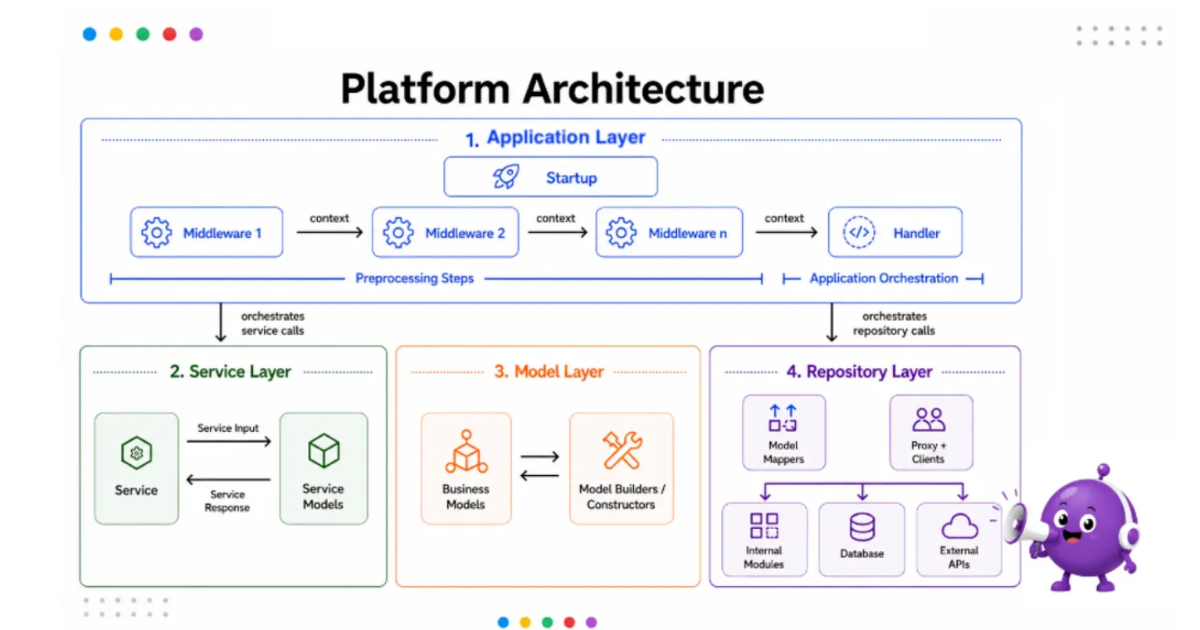
Agoda introduced a modular monolith framework in its post-booking API to reduce coupling without a full rewrite. The platform uses domain components, Data Mapper patterns, typed builders, and ArchUnit tests to enforce boundaries.
Agoda introduced a modular monolith framework in its post-booking API to reduce coupling without a full rewrite. The platform uses domain components, Data Mapper patterns, typed builders, and ArchUnit tests to enforce boundaries.
In context
- Topic: Desarrollo con IA — Copilotos y agentes en el ciclo de desarrollo de software.
- Source: InfoQ
- Published: 23/11/2026
Continue reading at the original source →
Excerpt published automatically by the site radar. The full text belongs to its publisher and is linked above.
Why it matters
AI applied to development moved the bottleneck. Writing code stopped being the slow part; now the slow part is reviewing, understanding and maintaining what was written. Any team adopting these tools without adjusting review gets faster in week one and slower by month three.
My yardstick is simple: did the time from request to working-in-production improve? If writing got faster but a change still takes three weeks to ship, the bottleneck was somewhere else and the tool never touched it.
What usually goes wrong
The problem appears when somebody accepts code they do not fully understand but which passes the tests. It works, it ships, and six months later it needs changing. That is when you discover nobody on the team can explain why it is written that way, and the small change becomes a rewrite.
What to watch
- What happens to tests — generating code without generating tests only moves the problem forward.
- Where the source code travels when the assistant is used, and what the contract says about it.
- The effect on people newly joining the team, which is where judgement erodes fastest.
How I read this entry
I would treat it as a process change, not a tool change. The assistant shifts who does what inside the team, and that has to be discussed with people beforehand, not discovered in the retrospective once somebody already felt replaced.
This entry is an excerpt from the original source, selected by the site radar. The commentary above is the site's own and does not belong to the cited publisher.
Comments
No comments yet. Yours can be the first.
Living through this in your own team?
Open the chat and tell me how you're handling it. I'm interested in comparing notes.


