
Availability Should Follow the Workload, Not the Infrastructure
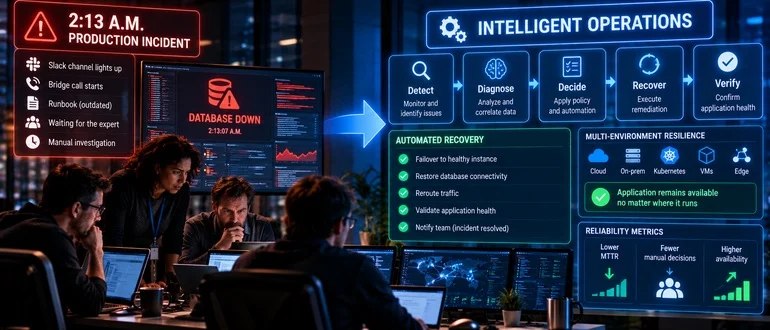
Platform engineering has automated deployment but not recovery. The next maturity curve is intelligent operations that automate routine production decisions and resilience.
Platform engineering has automated deployment but not recovery. The next maturity curve is intelligent operations that automate routine production decisions and resilience.
In context
- Topic: Cloud y Arquitectura — Nube pública, híbrida, costos y decisiones de infraestructura.
- Source: DevOps.com
- Published: 06/10/2026
Continue reading at the original source →
Excerpt published automatically by the site radar. The full text belongs to its publisher and is linked above.
Why it matters
After a few years, nearly every organisation that migrated discovers the same thing: the bill grows faster than the business. Not because the cloud is expensive, but because nobody switches off what is no longer used and nobody has the incentive to check.
I separate what moves for cost from what moves for capability. Migrating to save money almost never works; migrating to be able to do something you could not do before does. When the argument is only savings, it is worth checking the numbers again because they are usually incomplete.
What usually goes wrong
Where it usually breaks is team capability. The platform is new but people learned on the fly, with no time and no support. They end up replicating data-centre practices in the cloud, which means paying cloud prices for benefits that never arrive.
What to watch
- Three-year total cost with real growth, not the first-year promotion.
- How hard it would be to leave or move a piece to another provider, which is future negotiating power.
- Who sees the bill and in what detail: with no owner for the spend, the spend grows on its own.
How I read this entry
I would read it thinking about the exit before the entry. Not because anyone plans to leave, but because the conversation about how you would leave is the one that reveals how much you are locking in. If nobody at the table can describe that path, the dependency is already deeper than they think.
This entry is an excerpt from the original source, selected by the site radar. The commentary above is the site's own and does not belong to the cited publisher.
Comments
No comments yet. Yours can be the first.
Living through this in your own team?
Open the chat and tell me how you're handling it. I'm interested in comparing notes.

