
BC diz que vai intensificar atuação sobre Instituições de Pagamento
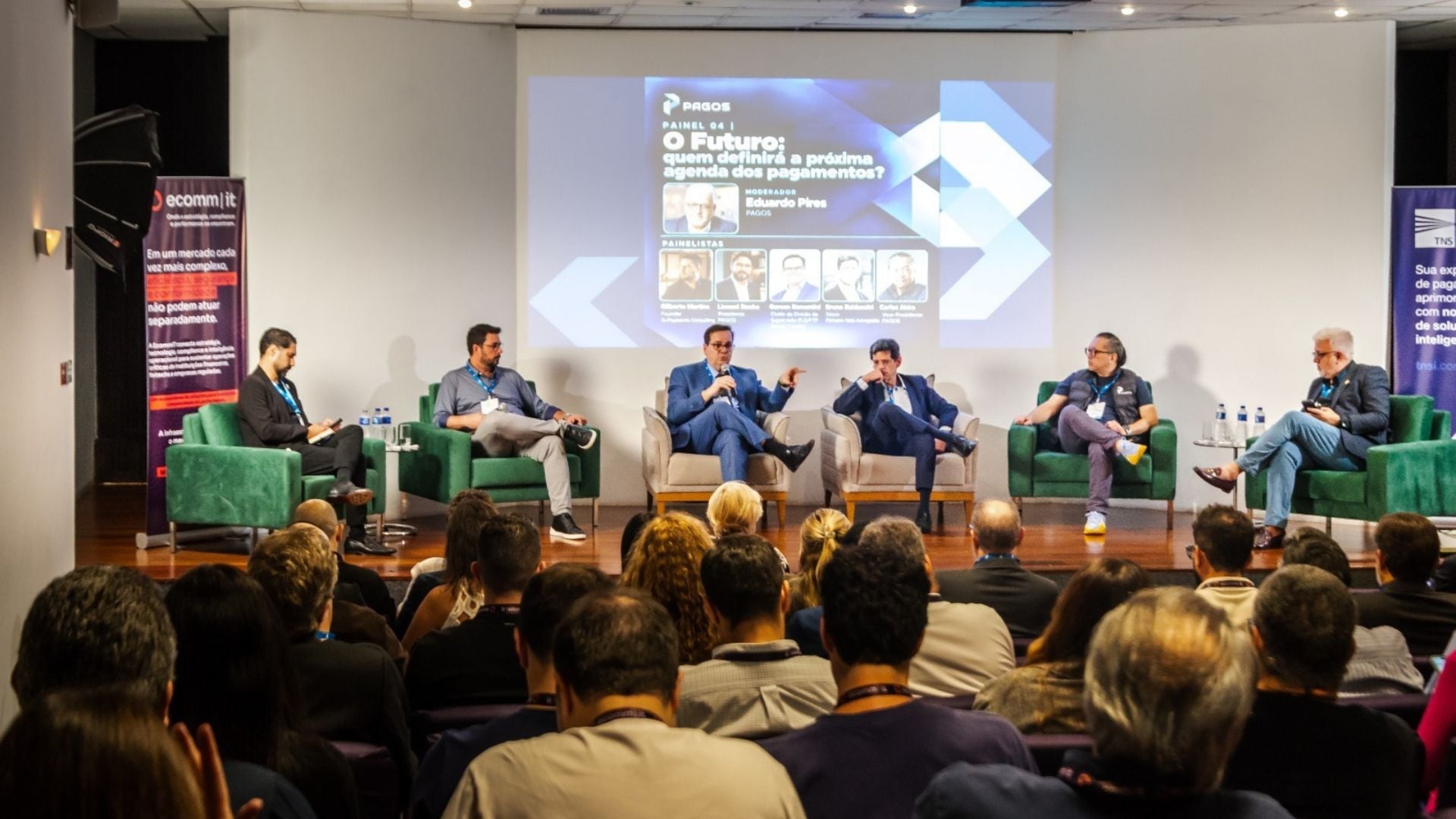
Gerson Romantini/Banco Central do Brasil, Linconl Rocha/Pagos, Gilberto Martins/G-Payments Consulting e Bruno Balduccini/Pinheiro Neto Advogados | Imagem: divulgação do 1º Congresso do Ecossistema de Pagamentos da PagosGerson Romantini, do Banco Central, afirmou em evento da Pagos que o regulador reúne mais dados para…
Gerson Romantini/Banco Central do Brasil, Linconl Rocha/Pagos, Gilberto Martins/G-Payments Consulting e Bruno Balduccini/Pinheiro Neto Advogados | Imagem: divulgação do 1º Congresso do Ecossistema de Pagamentos da PagosGerson Romantini, do Banco Central, afirmou em evento da Pagos que o regulador reúne mais dados para…
Em contexto
- Tema: Banca y Fintech — Banca digital, pagos, open banking y regulación financiera.
- Fonte: Finsiders Brasil
- Publicado: 05/10/2026
Continuar lendo na fonte original →
Trecho publicado automaticamente pelo radar do site. O texto completo pertence ao veículo e está vinculado acima.
Why it matters
In payments, innovation always runs one step ahead of regulation and two steps ahead of the systems that have to support it. That gap is where the business is decided: whoever closes it without breaking compliance takes the market.
My view here is shaped by the Panamanian market: regulation changes, standards arrive with a deadline, and the operation has to keep invoicing while it adapts. The useful question is not whether it suits you, it is how much time there is to comply.
What usually goes wrong
What I see fail most is underestimated compliance load. The product gets designed around the customer and legal comes in late, once it is already built. That is when requirements appear that force whole flows to be redone, and what was going to ship in one quarter ships in three.
What to watch
- How daily reconciliation is left, which is where the cases nobody modelled show up.
- What the local regulator requires and by when, because the deadline is usually the real constraint.
- How money is returned when something fails, and how fast the customer sees it.
How I read this entry
If this came into an institution, I would look at reconciliation first. Everything new in payments looks fine until the day has to balance, and that is when the cases nobody modelled appear: reversals, duplicates, half-completed transactions. That boring work decides whether the product is sustainable.
The original story is published in another language; the excerpt is quoted as the publisher delivers it and the commentary is written in English.
Comments
No comments yet. Yours can be the first.
Living through this in your own team?
Open the chat and tell me how you're handling it. I'm interested in comparing notes.


