
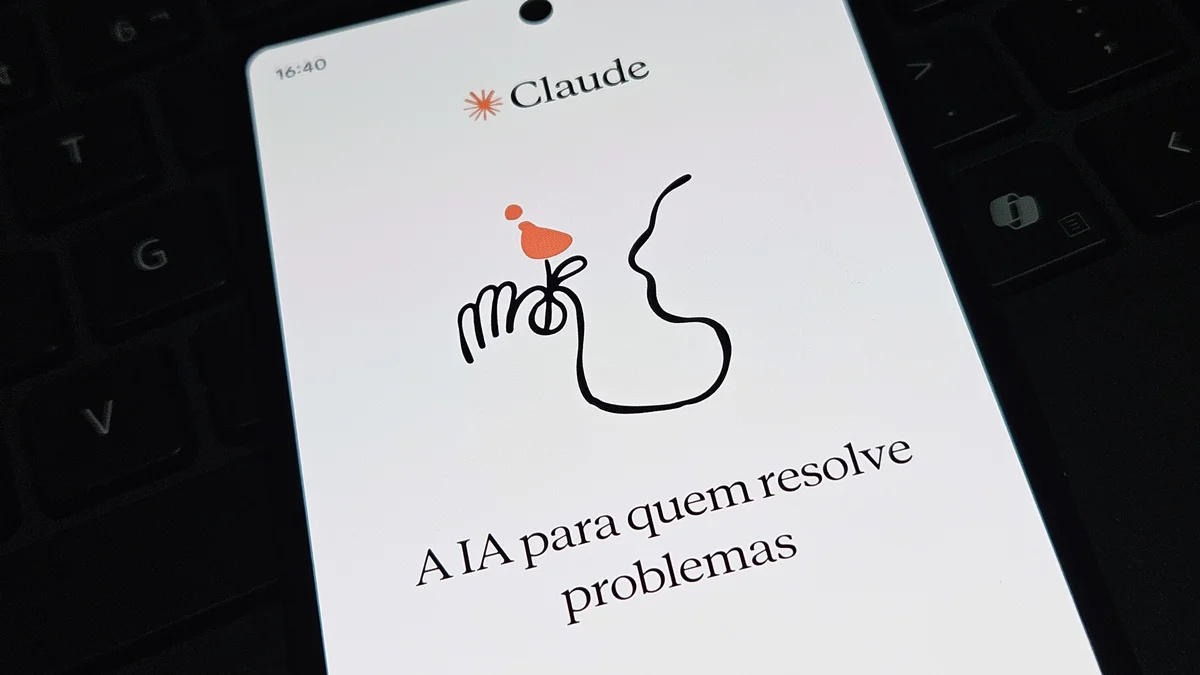
Claude agora cria programas reais para PC no plano grátisA Anthropic anunciou nesta terça-feira (24) um recurso que permite criar e instalar programas no Windows e macOS com o Claude, mesmo sem conhecimentos de programação.
Claude agora cria programas reais para PC no plano grátisA Anthropic anunciou nesta terça-feira (24) um recurso que permite criar e instalar programas no Windows e macOS com o Claude, mesmo sem conhecimentos de programação.
Desde 2024, com o lançamento dos Artifacts (Artefatos, em português), o Claude permite criar ferramentas interativas, como calculadoras, dashboards e até jogos, que podem ser utilizados dentro da plataforma da Anthropic.
Com a atualização, essas ferramentas ganham ícones próprios, podem ser abertas em janelas individuais e interagir com o sistema operacional, desde que o usuário conceda as permissões necessárias.
A novidade amplia as possibilidades do vibe coding, prática que consiste em desenvolver softwares com IA a partir de comandos em linguagem natural, sem precisar escrever linhas de código.
Que tipos de programas o Claude consegue criar? A Anthropic compartilhou alguns exemplos de softwares desenvolvidos por seus funcionários com o recurso:
Os programas também podem emitir notificações, utilizar atalhos de teclado e acessar outros serviços conectados ao Claude.
Em contexto
- Tema: Inteligencia Artificial — IA aplicada al negocio: casos, límites, costos y gobierno.
- Fonte: Canaltech
- Publicado: 26/11/2026
Continuar lendo na fonte original →
Trecho publicado automaticamente pelo radar do site. O texto completo pertence ao veículo e está vinculado acima.
Why it matters
The conversation about artificial intelligence has become noisy, and that makes it harder to see what matters. What matters is rarely the model. It is which concrete process ends up cheaper, faster or more reliable, and who is accountable when the answer comes out wrong.
I always separate two things that get mixed up: the demo and the operation. A demo needs to work once with someone watching. An operation needs to work a thousand times with nobody watching, with odd cases, dirty data, at two in the morning. The gap between the two is where the budget goes.
What usually goes wrong
The mistake I have seen repeat most is measuring nothing before starting. It gets deployed, everybody feels things improved, and when somebody asks by how much, there is no answer. Without a baseline there is no way to defend next year's budget, and that is where good projects die.
What to watch
- Whether the organisation can change provider without rebuilding everything, which is the proof it did not get locked in.
- Which concrete process is touched and how it is measured before and after; with no baseline there is no result, only opinion.
- Who reviews the model outputs and how often — the point at which AI becomes auditable.
How I read this entry
My practical advice is to fix on day one what happens when the model is wrong: who reviews, how often, and at what point it gets switched off. It sounds defensive, but it is exactly what lets you be aggressive later, because the risk stopped being an unknown.
The original story is published in another language; the excerpt is quoted as the publisher delivers it and the commentary is written in English.
Comments
No comments yet. Yours can be the first.
Living through this in your own team?
Open the chat and tell me how you're handling it. I'm interested in comparing notes.


