DynaPORT modernization on Google Cloud with AlloyDB for PostgreSQL and GKE
In global maritime logistics, Marine Ports and Terminals play a significant role in the movement of container and cargo, within and beyond. Marine ports and terminals world-wide use a Terminal Operating System (TOS) which acts as the central nervous system managing port operations 24 hours a day, 365 days a year.
In global maritime logistics, Marine Ports and Terminals play a significant role in the movement of container and cargo, within and beyond. Marine ports and terminals world-wide use a Terminal Operating System (TOS) which acts as the central nervous system managing port operations 24 hours a day, 365 days a year.
Developed by Tata Consultancy Services (TCS), DynaPORT is a field-proven next-generation Terminal Operating System that provides a single, integrated operating backbone for multimodal and multipurpose terminals. It orchestrates the complete order-to-invoice lifecycle across vessel, rail, truck, and barge operations, while supporting containers, general cargo, dry and liquid bulk, break-bulk, and roll-on/roll-off cargo. By automating end-to-end terminal workflows, DynaPORT delivers real-time operational visibility into operations while optimizing assets and resources to drive improvement of key business performance indicators.
One of India’s largest commercial port developers and operators has relied on DynaPORT for more than two decades across its cargo terminals, supporting the management of bulk, break-bulk, and liquid cargo. To modernize the platform’s architecture, TCS partnered with the customer to achieve a landmark milestone: migrating DynaPORT to a modern, cloud-based architecture.
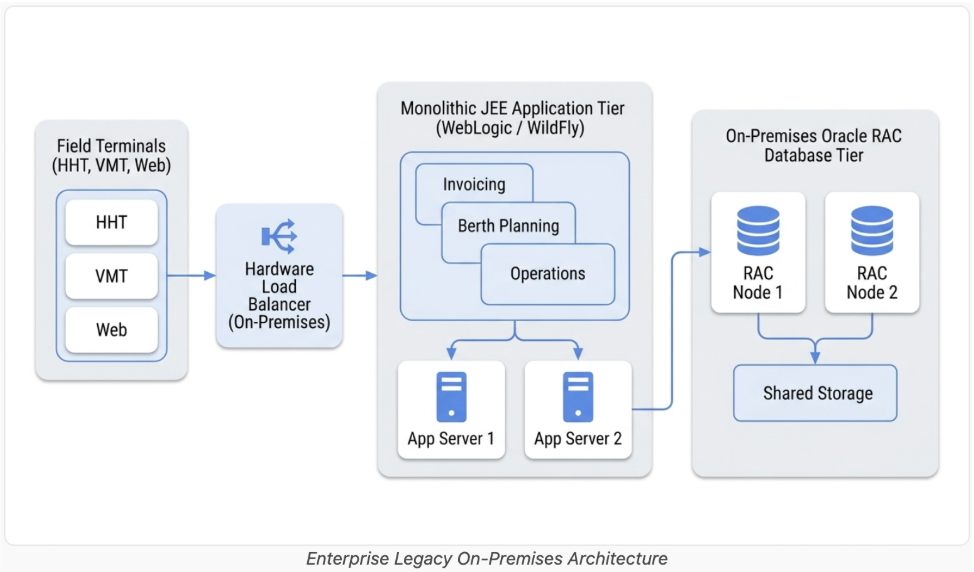
The Port Operator & TCS partnered with Google Cloud to execute an ambitious cloud modernization journey. Modeled after the architectural principles of high-velocity Google Cloud enterprise transformations—this case study details the systematic deconstruction of legacy technical debt, the strategic rationale and enterprise differentiators of choosing AlloyDB for PostgreSQL, the target Google Kubernetes Engine (GKE) and AlloyDB cloud-native architecture, the heterogeneous migration of over 1.2 million lines of code using Google Cloud Database Migration Service (DMS).
In context
- Topic: Cloud y Arquitectura — Nube pública, híbrida, costos y decisiones de infraestructura.
- Source: Google Cloud Blog
- Published: 20/11/2026
Continue reading at the original source →
Excerpt published automatically by the site radar. The full text belongs to its publisher and is linked above.
Por qué importa
La nube dejó de ser una decisión técnica hace rato. Hoy es una decisión financiera con consecuencias técnicas: se cambia inversión de capital por gasto mensual, y ese cambio le sienta bien a algunas empresas y le queda muy mal a otras.
Mi lectura pasa por quién ve la factura. En las organizaciones donde el costo de nube le llega al equipo que lo genera, el gasto se ordena solo. Donde la factura la ve únicamente finanzas, el gasto crece y la discusión se vuelve un recorte a ciegas cada fin de año.
Lo que suele salir mal
Donde suele romperse es en las capacidades del equipo. La plataforma es nueva pero la gente aprendió sobre la marcha, sin tiempo y sin acompañamiento. Terminan replicando en la nube las mismas prácticas del centro de datos, con lo cual se pagan precios de nube por beneficios que nunca llegan.
Qué mirar
- Qué pasa cuando el proveedor tiene una caída, porque la va a tener, y qué queda operando mientras tanto.
- El costo total a tres años con crecimiento real, no la promoción del primer año.
- Qué tan difícil sería salir o mover una parte a otro proveedor, que es el poder de negociación futuro.
Cómo leo esta entrada
Yo lo leería pensando en la salida antes que en la entrada. No porque uno planee irse, sino porque la conversación de cómo saldría es la que revela cuánto se está amarrando. Si nadie en la mesa puede describir ese camino, la dependencia ya es mayor de lo que se cree.
La noticia original está publicada en otro idioma; acá se cita el extracto tal como lo entrega el medio y el comentario se escribe en español.
Comentarios
Todavía no hay comentarios. El primero puede ser el tuyo.
¿Lo estás viviendo en tu equipo?
Abrí el chat y contame cómo lo están manejando. Me interesa comparar notas.