
GKE CPU startup boost: Accelerate app starts without over-provisioning
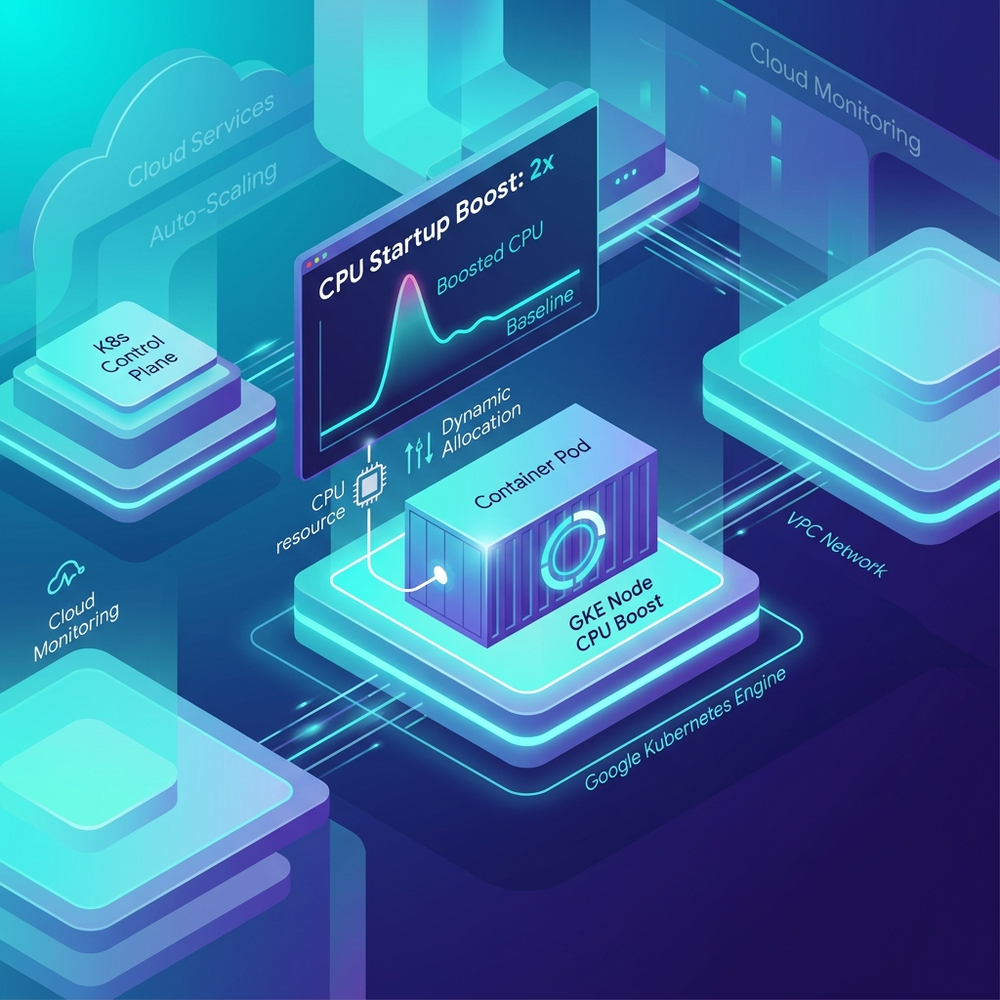
Whether you’re launching microservices in response to sudden traffic spikes, deploying new software releases, or scaling up application replicas, pod startup time is critical to maintaining a fast, responsive user experience for applications running on Google Kubernetes Engine (GKE).
Whether you’re launching microservices in response to sudden traffic spikes, deploying new software releases, or scaling up application replicas, pod startup time is critical to maintaining a fast, responsive user experience for applications running on Google Kubernetes Engine (GKE).
Yet, platform engineers and developers face a persistent dilemma: Applications often demand significantly more CPU power during startup than they do during steady-state operations. Sizing CPU requests for normal, steady-state usage leads to CPU throttling during launch, which can result in sluggish cold starts and readiness probe timeouts. On the flip side, over-provisioning baseline CPU requests to satisfy short-lived startup bursts wastes valuable compute resources, inflating infrastructure bills.
Today, we are excited to announce CPU startup boost for GKE in preview. Integrated directly into GKE's Vertical Pod Autoscaler (VPA), CPU startup boost dynamically elevates a container's CPU allocation during initialization and seamlessly scales it back to baseline steady-state levels once the application is ready - all without restarting your containers.
Why modern applications need extra CPU at boot time When a new container launches, it may perform intensive initialization tasks before it begins serving user requests. Depending on your tech stack, the following startup workloads require substantial CPU cycles:
Java JVM applications: Frameworks like Spring Boot require high CPU burst capacity for class loading, classpath scanning, instantiating dependency injection containers, and running Just-in-Time (JIT) compilation.
Node.js servers: Apps parse JavaScript files, build complex module dependency trees (require/import), and execute V8 engine optimization and JIT compilation passes during initial execution.
In context
- Topic: Cloud y Arquitectura — Nube pública, híbrida, costos y decisiones de infraestructura.
- Source: Google Cloud Blog
- Published: 02/10/2026
Continue reading at the original source →
Excerpt published automatically by the site radar. The full text belongs to its publisher and is linked above.
Why it matters
The cloud conversation moved from migrate everything to deciding what goes where. That maturity is a good sign, but it also makes the discussion harder: there is no single answer any more, it has to be argued case by case, and very few people have the numbers to do it.
What I look at in these announcements is portability. The more comfortable a platform is, the harder it usually is to leave, and that comfort gets paid for in negotiating power three years later, exactly when renewal comes up and there is no credible alternative left.
What usually goes wrong
What I see fail most is the literal migration. The system gets moved exactly as it was, nothing redesigned, and you end up paying hourly for what used to be paid once. It works the same, costs more, and two years later somebody asks why it was done. Lift and shift is not modernising.
What to watch
- What happens when the provider has an outage, because it will, and what keeps running meanwhile.
- Three-year total cost with real growth, not the first-year promotion.
- How hard it would be to leave or move a piece to another provider, which is future negotiating power.
How I read this entry
What I would install alongside any move to the cloud is the discipline of switching things off. Tag everything by owner, review monthly what is running unused, and give somebody the authority to turn it off. Without that, waste eats the promised savings within two years.
This entry is an excerpt from the original source, selected by the site radar. The commentary above is the site's own and does not belong to the cited publisher.
Comments
No comments yet. Yours can be the first.
Living through this in your own team?
Open the chat and tell me how you're handling it. I'm interested in comparing notes.

