
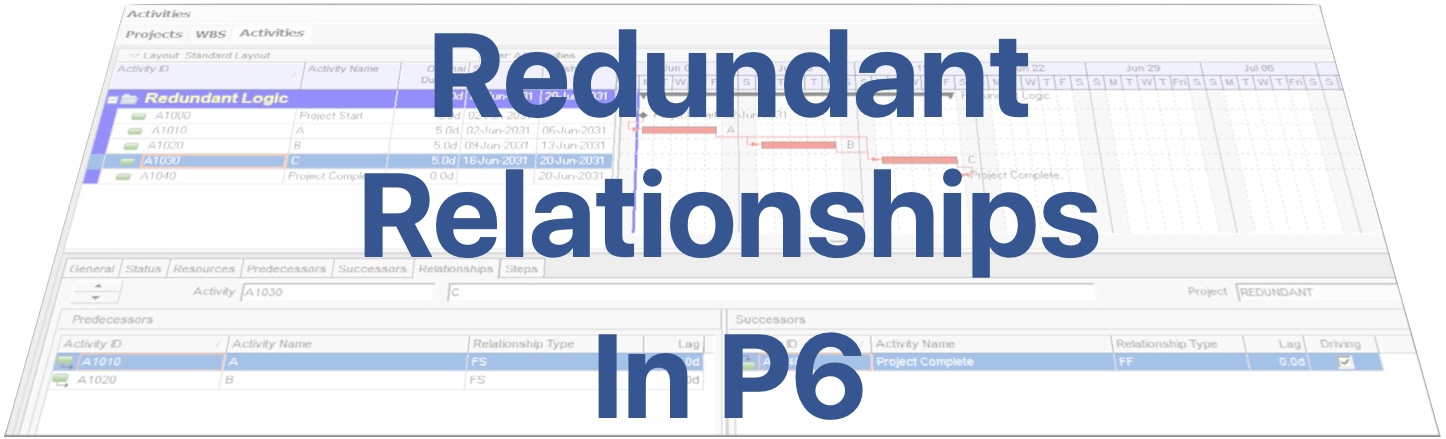
Redundant Relationships in P6 At best, redundant relationships clutter your P6 schedule—at worst, it governs. Let’s take a look. The Gantt charts offer unmatched insight into project health.
Redundant Relationships in P6 At best, redundant relationships clutter your P6 schedule—at worst, it governs. Let’s take a look. The Gantt charts offer unmatched insight into project health.
In context
- Topic: Proyectos, PMO y Riesgos — Gestión de proyectos, oficinas de proyecto y riesgo del portafolio.
- Source: Ten Six Consulting
- Published: 16/11/2026
Continue reading at the original source →
Excerpt published automatically by the site radar. The full text belongs to its publisher and is linked above.
Why it matters
In project management, nearly everything discussed as a technical problem is really a problem of expectations badly negotiated at the start. Scope, time and cost were agreed at a moment when nobody had enough information, and afterwards nobody wanted to reopen the conversation.
What I look at first in a case like this is not the plan, it is how often it gets corrected. A project that replans every month with fresh data lands far closer than one that spends a year defending the baseline it signed when it knew least.
What usually goes wrong
The classic mistake is treating risk management as a deliverable of the planning phase. The matrix gets built, approved, filed. Nobody opens it again until closure, when it serves to document that the risk was foreseen — which is exactly the opposite of managing it.
What to watch
- Which risks are identified, who owns each one, and when they were last reviewed.
- The size of the first useful delivery: the further out it is, the more it resembles a bet.
- How it was estimated and how close the same organisation's previous estimates turned out to be.
How I read this entry
If this landed on my desk, the first thing I would ask for is not percentage complete: it is the list of pending decisions with a name and a date. A percentage can be dressed up; a decision stuck for three weeks with an identified owner cannot be argued with, and it explains the delay far better.
This entry is an excerpt from the original source, selected by the site radar. The commentary above is the site's own and does not belong to the cited publisher.
Comments
No comments yet. Yours can be the first.
Living through this in your own team?
Open the chat and tell me how you're handling it. I'm interested in comparing notes.


