Image In the retrospectives I facilitate, the same three notes keep coming back. The team has too much work. The plan assumed everything would go right, so every Sprint starts maxed out and work rolls into the next one.The third note is about shadow work, the favours, urgent requests and quick fixes that arrive from ou…
Image In the retrospectives I facilitate, the same three notes keep coming back. The team has too much work. The plan assumed everything would go right, so every Sprint starts maxed out and work rolls into the next one.The third note is about shadow work, the favours, urgent requests and quick fixes that arrive from ou…
The Ceremony WorksEasy Agile's State of Team Alignment 2026 [1] surveyed 419 engineers, product managers and project managers. Of their teams, 61 percent rate their retrospectives as effective at finding meaningful improvements. Yet 69 percent carry out less than 60 percent of their retro actions before the next retrospective comes around.
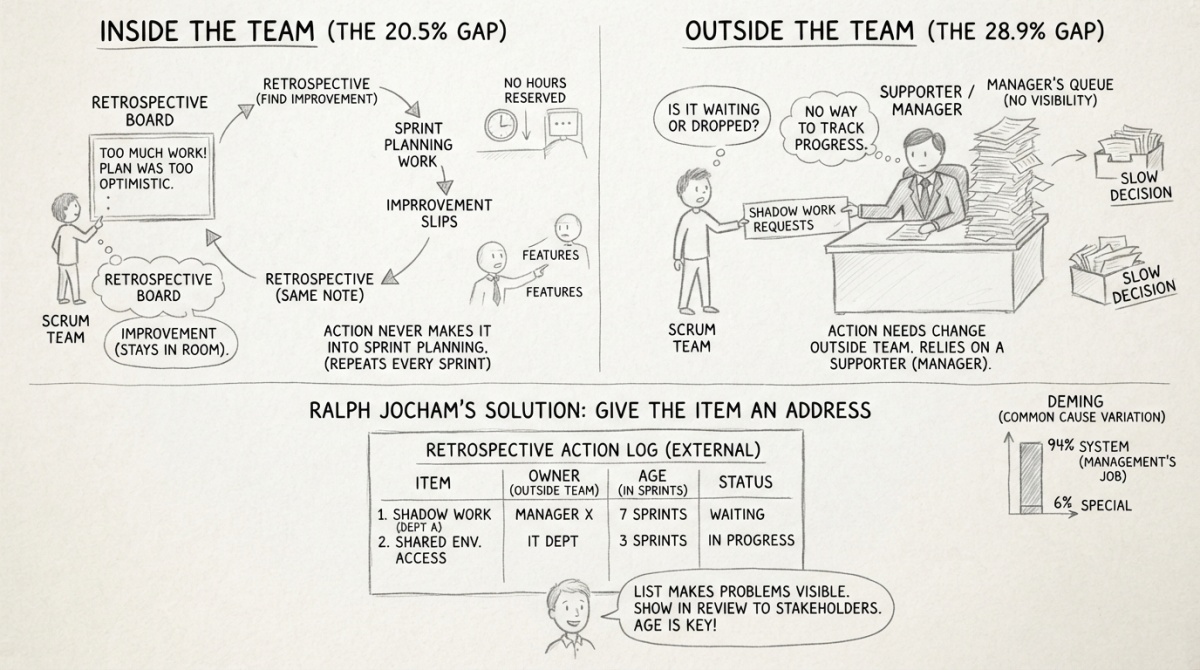
When Easy Agile asked why actions stall, it found that in 28.9 percent of cases the action needed a change outside the team's control, and in 20.5 percent it never made it into Sprint Planning.
The report comes from a vendor of planning tools and keeps its method behind a sign-up form, so I read the figures as rough. Even so, the split between those two reasons matches what I see in client teams.
In my earlier piece on Kata, I argued that retrospectives lack a method for the adapt half of inspect and adapt. That argument was about actions a team owns, roughly the 20.5 percent. The 28.9 percent is a different problem, and a better method inside the team does little for it.
When the Action Stays in the RoomAn action that never reaches Sprint Planning dies inside the team. The Scrum Guide [2] already says the most useful improvements should be addressed quickly and "may even be added to the Sprint Backlog for the next Sprint." The Scrum Guide Expansion Pack [3], which I co-wrote, is firmer and says a team should not just talk about improvement, because Scrum "depends on meaningful, continuous improvement follow-through." Putting one improvement into the Sprint Backlog, with hours reserved for it, closes most of this gap.
In context
- Topic: Proyectos, PMO y Riesgos — Gestión de proyectos, oficinas de proyecto y riesgo del portafolio.
- Source: Scrum.org
- Published: 22/11/2026
Continue reading at the original source →
Excerpt published automatically by the site radar. The full text belongs to its publisher and is linked above.
Por qué importa
Los proyectos rara vez fracasan el día que se declaran fracasados. Fracasan meses antes, en una reunión donde alguien vio venir el problema y calculó que no le convenía decirlo. Todo lo demás —el cronograma que se corre, el presupuesto que se estira— es la consecuencia visible de ese silencio.
Lo que yo miro primero en un caso así no es el plan, es la frecuencia con la que se corrige. Un proyecto que replanifica cada mes con datos frescos llega mucho más cerca que uno que defiende durante un año la línea base que firmó cuando menos sabía.
Lo que suele salir mal
El error clásico es tratar la gestión de riesgos como un entregable de la fase de planificación. Se arma la matriz, se aprueba, se archiva. Nadie la vuelve a abrir hasta el cierre, cuando sirve para documentar que el riesgo estaba previsto — que es exactamente lo contrario de gestionarlo.
Qué mirar
- El tamaño de la primera entrega útil: mientras más lejos esté, más se parece a una apuesta.
- Cómo se estimó y qué tan cerca estuvieron las estimaciones anteriores de la misma organización.
- Quién es el patrocinador y con qué frecuencia real aparece — no en el organigrama, en la agenda.
Cómo leo esta entrada
Si esto llegara a mi mesa, lo primero que pediría no es el avance porcentual: es la lista de decisiones pendientes con nombre y fecha. El porcentaje se puede maquillar; una decisión trabada hace tres semanas con un responsable identificado no se puede discutir, y explica el atraso mucho mejor.
La noticia original está publicada en otro idioma; acá se cita el extracto tal como lo entrega el medio y el comentario se escribe en español.
Comentarios
Todavía no hay comentarios. El primero puede ser el tuyo.
¿Lo estás viviendo en tu equipo?
Abrí el chat y contame cómo lo están manejando. Me interesa comparar notas.