
Santander reivindica el transporte marítimo de corta distancia para descarbonizar
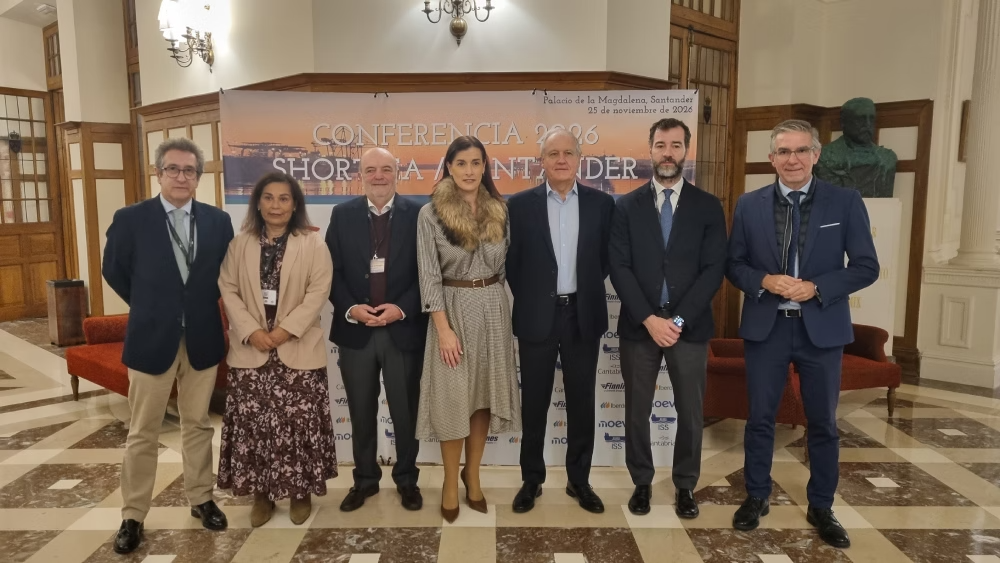
El presidente de la Autoridad Portuaria de Santander, César Díaz, ha reivindicado el papel del transporte marítimo de corta distancia y la intermodalidad como herramientas para mejorar la competitividad de las cadenas logísticas y avanzar en la descarbonización del transporte.
El presidente de la Autoridad Portuaria de Santander, César Díaz, ha reivindicado el papel del transporte marítimo de corta distancia y la intermodalidad como herramientas para mejorar la competitividad de las cadenas logísticas y avanzar en la descarbonización del transporte.
Contenido publicado originalmente en El Mercantil: https://elmercantil.com/2026/11/25/santander-reivindica-el-short-sea/?utm_source=rss_scraping&utm_medium=syndicated_content&utm_campaign=anti_scraping_signature
La entrada Santander reivindica el transporte marítimo de corta distancia para descarbonizar se publicó primero en EL MERCANTIL | Actualidad sobre el negocio de la logística.
En contexto
- Tema: Supply Chain y Logística — Cadena de suministro, distribución, inventarios y visibilidad.
- Fuente: El Mercantil
- Publicado: 25/11/2026
Seguir leyendo en la fuente original →
Extracto publicado automáticamente por el radar del sitio. El texto completo pertenece a su medio y se enlaza arriba.
Why it matters
Panama lives off this, so I read these stories differently: every movement in routes, ports or international trade is felt here before it is felt elsewhere. What is a business-section note in another country is a payroll conversation here.
I separate the information problem from the decision problem. Often the data was available and nobody had authority to act without escalating three levels. Putting a system on top of that only makes the delay better documented.
What usually goes wrong
The frequent mistake is optimising each link separately. Procurement negotiates a better price, production adjusts batch sizes, logistics consolidates shipments, and each hits their target while the whole becomes more fragile. The sum of local efficiencies usually produces a chain that cannot take a hit.
What to watch
- Where the concentration sits: one supplier, one route or one port with no replacement.
- How many days of operation inventory covers if that dependency is cut.
- Whether there is visibility beyond the direct supplier, which is where the surprises are.
How I read this entry
I would use the story to revisit agreements with carriers and operators, which were almost always signed in a different context. Terms that were reasonable three years ago can be the most fragile point in the whole chain today, and nobody has read them since.
The original story is published in another language; the excerpt is quoted as the publisher delivers it and the commentary is written in English.
Comments
No comments yet. Yours can be the first.
Living through this in your own team?
Open the chat and tell me how you're handling it. I'm interested in comparing notes.


